Rishon
Sabri, 2024 Rishon
Sabri, 2024To contact the author, please e-mail: rishonsabri@gmail.com |
Case Study: Faster than light travel
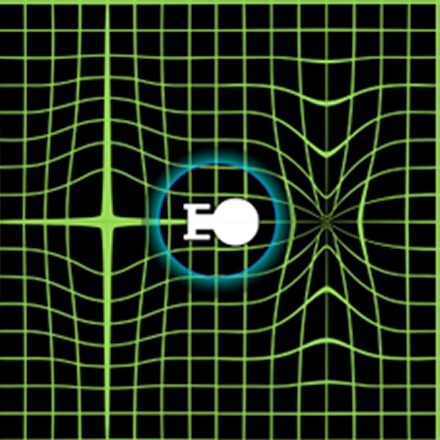 In Star Trek the warp drive is a device that allows
spaceships to travel faster than the speed of light, which is
299,792,458 metres per second, to travel vast distances in extremely
short times. However, conventional physics, of course dictates that no
normal object can travel as fast or faster than the speed of light. In Star Trek the warp drive is a device that allows
spaceships to travel faster than the speed of light, which is
299,792,458 metres per second, to travel vast distances in extremely
short times. However, conventional physics, of course dictates that no
normal object can travel as fast or faster than the speed of light.Due to how such technology would aid in our exploration of space in ways we can hardly imagine, many researchers have looked into its feasibility. In one case a paper published in 1994 by astrophysicist Miguel Alcubierre states that a warp drive could theoretically be achieved using a concept called the Alcubierre drive. This can be done within the rules of general relativity, without using the concept of wormholes, by using the local expansion of spacetime behind a spaceship. The Alcubierre drive makes use of a supply of negative energy whose gravitation creates a carefully shaped distortion in space time, which he called a "warp bubble" because Alcubierre was a Star Trek fan. Alcubierre stated in an email to Star Trek actor William Shatner that his theory was directly inspired by the term used in the TV series Star Trek and cites the "warp drive of science fiction" in his 1994 paper "The warp drive: hyper fast travel within general relativity". In an interview with futurist and start up founder Tim Ventura, Alcubierre said that it was watching Star Trek: The Next Generation gave him the idea of warping space time in order to travel at faster than light speeds. Unfortunately, the concept of the warp drive is currently only theoretical due to the lack of the technology to implement it. For example, it would require exotic matter (matter with exotic physical properties), which violates all currently known laws of physics. However, while concepts such as this seem almost impossible right now, new technological and scientific advancements in the future may make them a reality one day. In this case, science fiction can act as a template for future scientific research and provide inspiration for new ideas, no matter how advanced the ideas and technology required to prove them may seem or how impossible the science behind it appears to be.
|
||