Rishon
Sabri, 2024 Rishon
Sabri, 2024To contact the author, please e-mail: rishonsabri@gmail.com |
Case Study: Computer technology
 While advancement in medical and
communication technology are essential for progress, without a doubt
one of the most prominent advancements in the last century has been the
development of computers and how we use them to transform our lives.
Even if you look at names of computers and programs on them alone you
can see the influence of science fiction on them in some way or form.
For example, the Altair is arguably the first commercially successful
personal computer released (1975) and its name was suggested to the
inventor by Les Solomon, the editor of Popular Electronics magazine. He
was asked to think of a name for the computer and his 12-year-old
daughter, Lauren, who was following the 'new' sci-fi series Star Trek
at the time, said "Why don't you call it Altair - that's where the
Enterprise is going tonight". The voice-based virtual assistant
programme on Microsoft Windows, Cortana, was named after the artificial
intelligence in the science fiction computer game Halo. Apple's
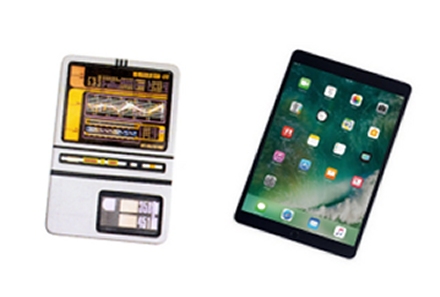
original iPad was supposed to be called the iSlate but Apple founder
Steve Jobs was so inspired by Star Trek that he wanted it called the
iPad, after a similar device found in Star Trek: The Next Generation
called the PADD (Personal Access Display Device). While advancement in medical and
communication technology are essential for progress, without a doubt
one of the most prominent advancements in the last century has been the
development of computers and how we use them to transform our lives.
Even if you look at names of computers and programs on them alone you
can see the influence of science fiction on them in some way or form.
For example, the Altair is arguably the first commercially successful
personal computer released (1975) and its name was suggested to the
inventor by Les Solomon, the editor of Popular Electronics magazine. He
was asked to think of a name for the computer and his 12-year-old
daughter, Lauren, who was following the 'new' sci-fi series Star Trek
at the time, said "Why don't you call it Altair - that's where the
Enterprise is going tonight". The voice-based virtual assistant
programme on Microsoft Windows, Cortana, was named after the artificial
intelligence in the science fiction computer game Halo. Apple's
original iPad was supposed to be called the iSlate but Apple founder
Steve Jobs was so inspired by Star Trek that he wanted it called the
iPad, after a similar device found in Star Trek: The Next Generation
called the PADD (Personal Access Display Device).While demonstrating real-time translation of Skype video technology at the Code conference in California in 2014, Gurdeep Pall, corporate vice president of Skype and Lync at Microsoft said, "It is early days for this technology, but the Star Trek vision for a Universal Translator isn't a galaxy away, and its potential is every bit as exciting as those Star Trek examples". 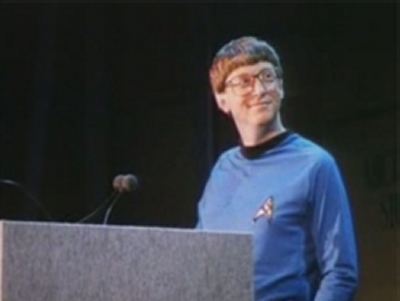 Apple
and Microsoft are particularly relevant in this case study not only
because of the very close association of computer technology with
science fiction but also because Star Trek was a large influence for
some of the founders of computer companies, in particular, Steve
Wozniak of Apple and Bill Gates of Microsoft. Apple
and Microsoft are particularly relevant in this case study not only
because of the very close association of computer technology with
science fiction but also because Star Trek was a large influence for
some of the founders of computer companies, in particular, Steve
Wozniak of Apple and Bill Gates of Microsoft.Steve Wozniak once said during a 2017 Huffington Post interview, "I'm not sure I would have had the inspiration to ever start Apple and do all these technical things and had meaning in my life if I hadn't gone to Star Trek conventions when I was young". This sentence clearly indicates that without Star Trek one of the co-founders of one of the most influential companies for scientific development may have never even gone into the tech industry. Bill Gates, on the other hand, has been spotted wearing the uniform of a Starfleet science officer from Star Trek: The Original Series at product launches in the 1990s, perhaps acknowledging the connection between his new technological developments and Star Trek. These examples both show how science fiction can be used to influence others into going into fields that will have a positive impact on scientific and technological development and how many people already see the connection between science fiction and science.
|
||