
| Symphytum orientale | |
|
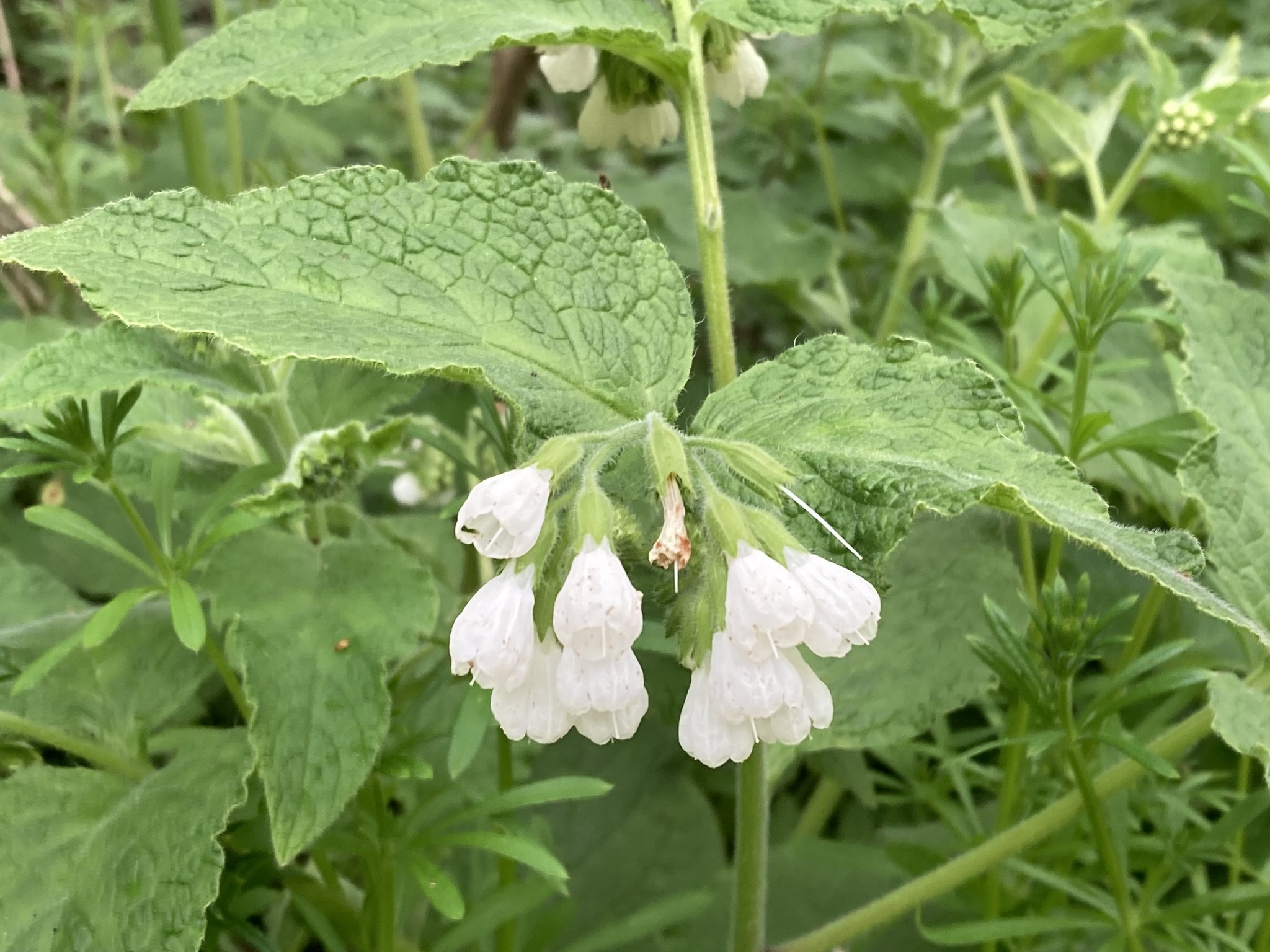 Location: Grantchester Meadows, Cambridgeshire |
||
| Symphytum orientale,
commonly known as White Comfrey or Oriental Comfrey, is a
perennial herbaceous plant native to Western Asia and the
Caucasus region. Medicinal uses: Like other comfrey species, S. orientale has been traditionally used to treat various ailments, such as wounds, sprains, and bruises, due to its anti-inflammatory and healing properties. However, it is crucial to note that comfrey contains pyrrolizidine alkaloids, which can be toxic to the liver when ingested or absorbed through the skin in large quantities. Therefore, using White Comfrey for medicinal purposes should be done with caution and under the guidance of a healthcare professional. Fertilizer and compost: S. orientale can be used as a green manure or in compost to enrich the soil. Its deep roots bring up nutrients from the subsoil, and its leaves are high in nitrogen, phosphorus, and potassium. Chopped leaves can be added to the compost pile or used as a mulch around plants. Ornamental value: White Comfrey can be grown in the garden as an ornamental plant due to its attractive foliage and clusters of small, bell-shaped white flowers. It is well-suited to woodland gardens, mixed borders, or naturalized areas. |