
| Salix alba | |
|
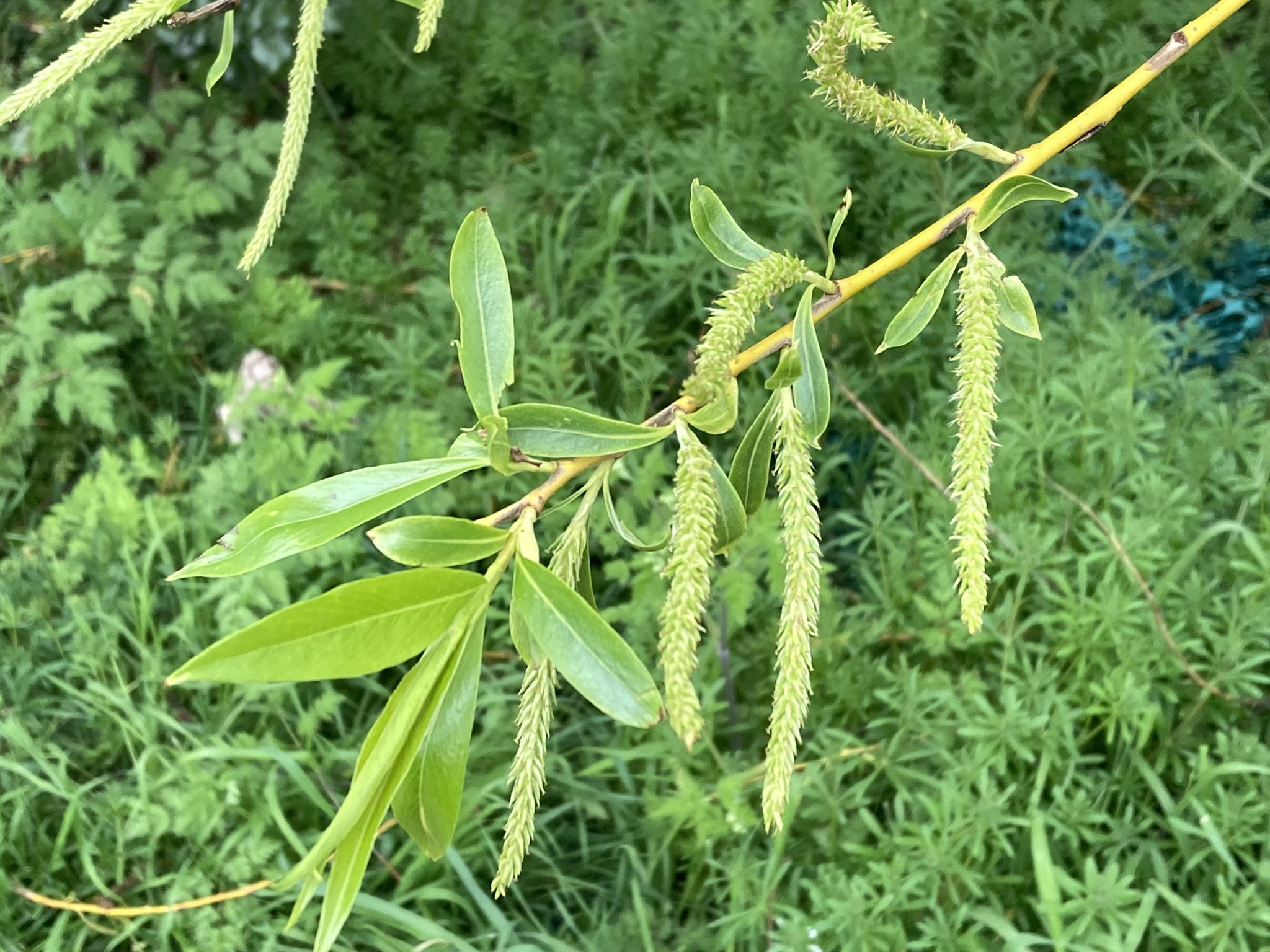 Location: Grantchester Meadows, Cambridgeshire |
||
| Salix alba, commonly
known as White Willow or European Willow, is a deciduous
tree native to Europe and western and central Asia. Medicinal uses: The bark of the White Willow contains salicin, a compound with pain-relieving and anti-inflammatory properties. This compound was used historically to treat fever, pain, and inflammation. Aspirin, a synthetic compound with similar properties, was later developed from salicin. Basket weaving: The flexible branches and twigs of S. alba, known as "withies," have traditionally been used for basket weaving, wattle fencing, and various other crafts. Erosion control and habitat restoration: White Willow is often used in erosion control, particularly along riverbanks and wetlands, due to its extensive root system and ability to thrive in wet soils. It also provides habitat for various wildlife species, including birds, mammals, and insects. Ornamental value: S. albacan be a valuable addition to parks, gardens, and other landscape settings due to its attractive, fast-growing habit, and ability to adapt to various soil types and conditions. Several cultivars with distinct features, such as the Golden Willow (Salix alba 'Vitellina') or the Cricket Bat Willow (Salix alba 'Caerulea'), have been developed for ornamental purposes. Wood and biomass: The wood of S. alba is lightweight, making it suitable for various purposes, including cricket bats, tool handles, and wood pulp production. Additionally, White Willow can be used as a biomass crop for bioenergy production due to its fast growth and ability to coppice. When planting or foraging S. alba, ensure proper identification and follow responsible and sustainable practices to protect the local ecosystem. |