
| Green Alkanet |
|
|
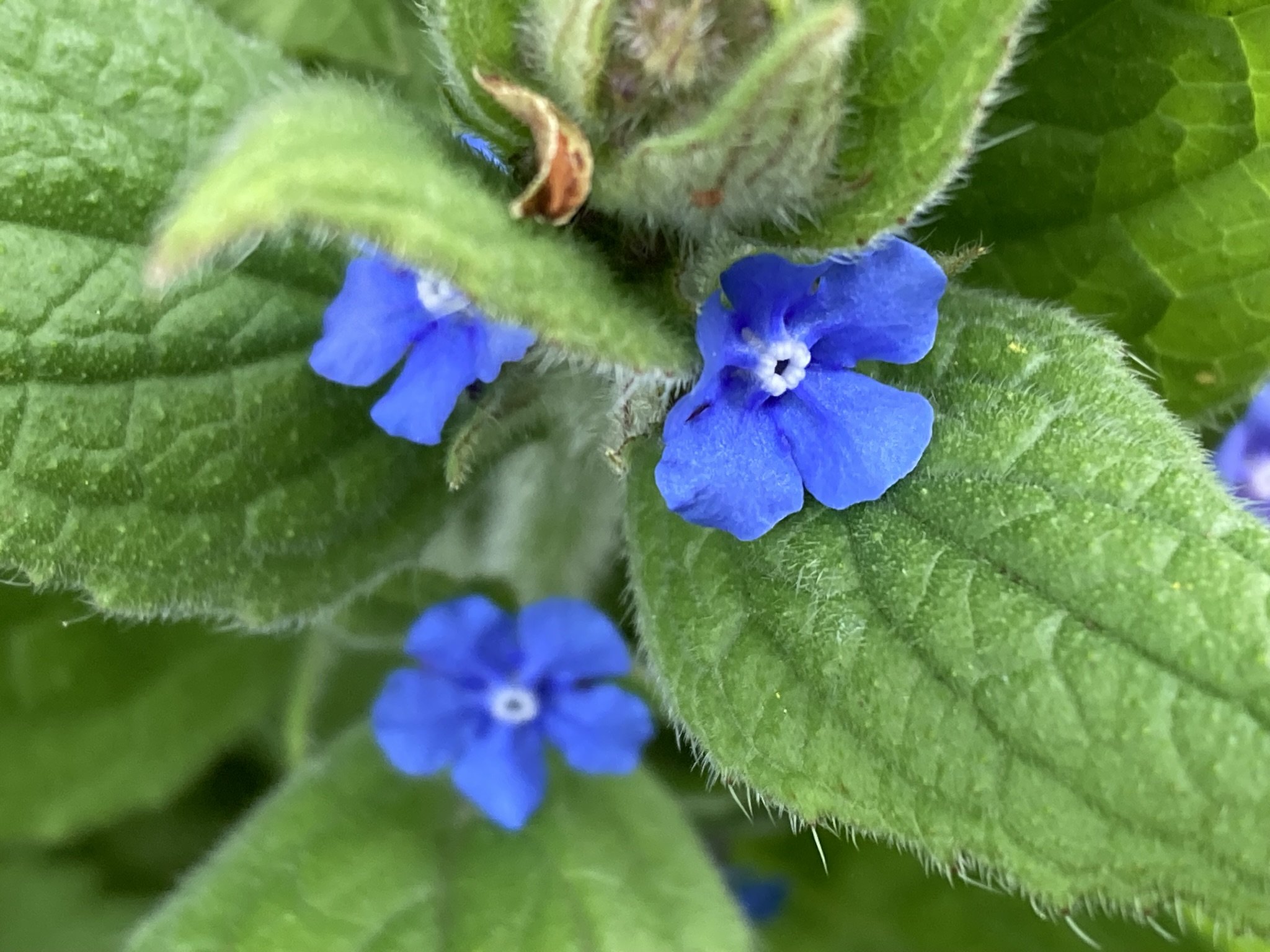 Location: Grantchester Meadows, Cambridgeshire |
||
| Pentaglottis sempervirens,
commonly known as Green Alkanet or Evergreen Bugloss, is a
perennial herbaceous plant native to Western Europe. The
name "Green Alkanet" can indeed be a bit misleading due to
its blue flowers. Green Alkanet is named for its
resemblance to Alkanet and its evergreen foliage rather
than the color of its flowers. The "green" in Green
Alkanet refers to its evergreen foliage, which remains
green throughout the year. The blue flowers are not the
source of its name, although they are indeed one of the
most visually striking features of the plant. The name is
derived from the plant's similarity to Alkanna tinctoria,
commonly known as "True Alkanet" or "Alkanet." Both Green
Alkanet (Pentaglottis sempervirens) and True
Alkanet (Alkanna tinctoria) belong to the borage
family (Boraginaceae) and share similarities in appearance
and uses, particularly in dye production. Ornamental value: Green Alkanet is appreciated for its attractive, bright blue flowers that bloom from spring to early summer. It can be a beautiful addition to wildflower gardens, cottage gardens, or woodland edges. Traditional dye: Historically, the roots of Green Alkanet have been used as a source of red dye, particularly for fabrics and cosmetics. The dye's red color comes from the presence of the pigment alkanin. Medicinal uses: Although there are some traditional medicinal uses for Green Alkanet, such as treating skin conditions and inflammation, there is limited scientific evidence to support these claims. It is advisable to consult a healthcare professional before using P. sempervirens for medicinal purposes. |