
| Carex riparia | |
|
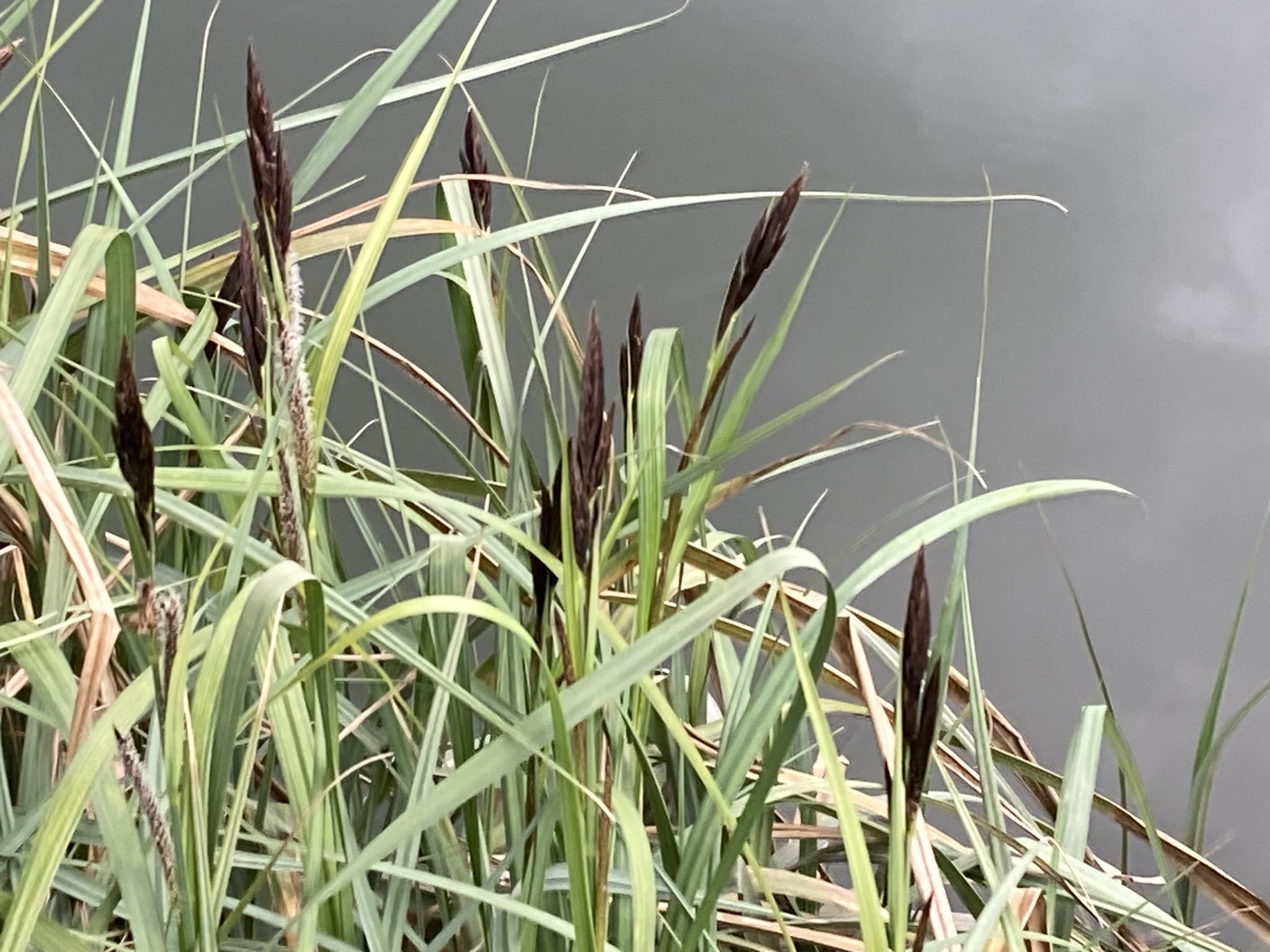 Location: Grantchester Meadows, Cambridgeshire |
||
| Carex riparia, commonly
known as Greater Pond Sedge, is a perennial grass-like
plant in the family Cyperaceae. It is native to Europe and
parts of Asia and North Africa. Wetland restoration: C. riparia is a valuable plant for wetland restoration and habitat creation projects. It can help stabilize riverbanks, pond edges, and other riparian areas due to its dense root system, which prevents soil erosion. Wildlife habitat: Greater Pond Sedge provides essential cover, nesting material, and food for various bird species, small mammals, and insects. Its dense growth can create a safe habitat for a range of wildlife. Ornamental value: C. riparia can be an attractive addition to water gardens, pond edges, or damp areas in the landscape. Its upright growth habit and distinctive, spike-like flower heads can add structure and visual interest to garden designs. Water filtration: C. riparia, like other sedges, can help filter out pollutants and excess nutrients from waterways. This can contribute to improving water quality in ponds, streams, and other bodies of water. Traditional uses: The leaves and stems of sedges like C. riparia have been used historically for weaving baskets, making mats, or crafting other items. However, these uses are less common today, with other materials being more widely available |