
| Elderberry |
|
|
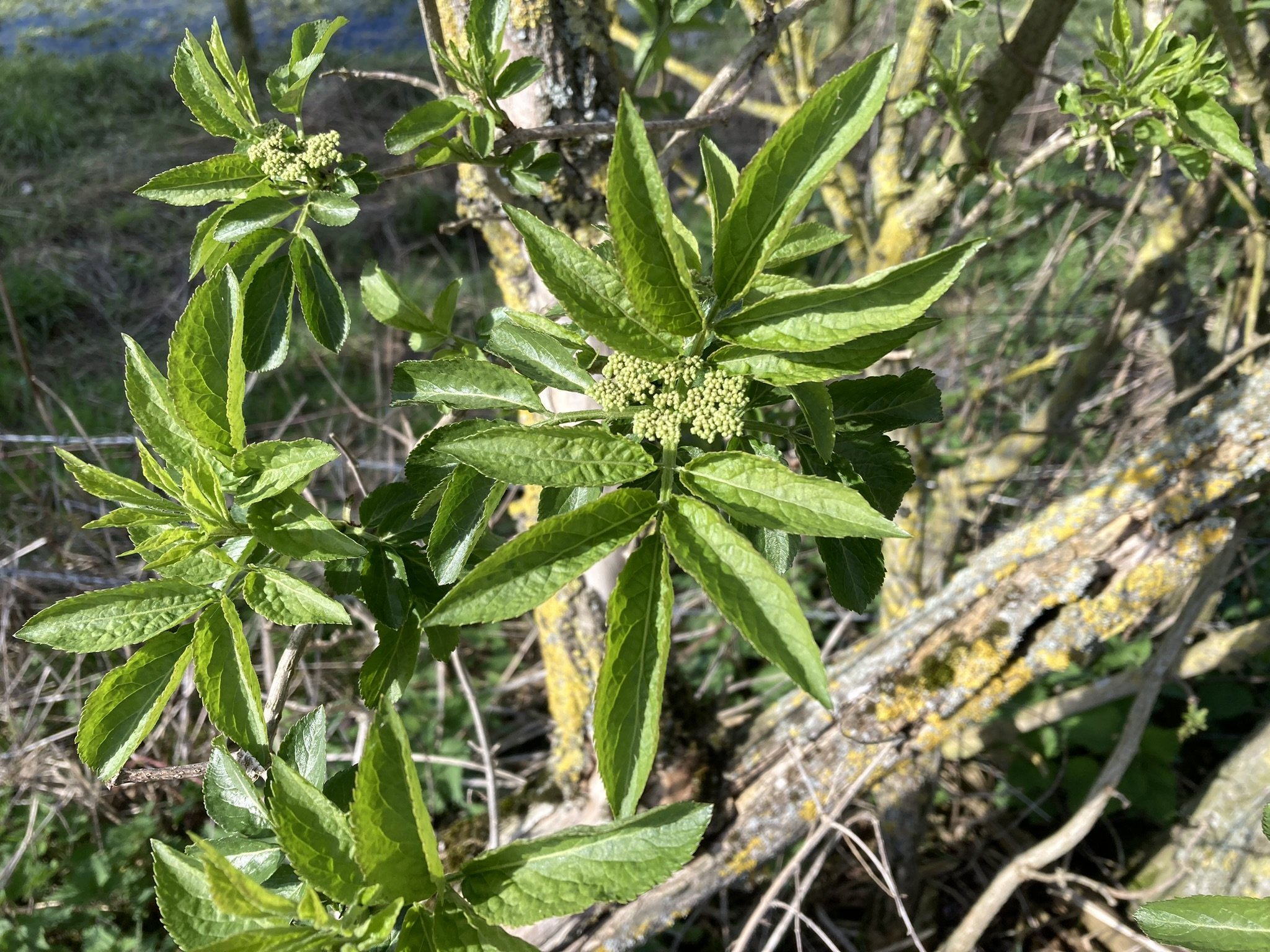 Location: Fen Drayton Nature Reserve, Cambridgeshire |
||
| Sambucus
nigra, commonly known as Elderberry, the Black Elder
or European Elder, is a deciduous shrub or small tree
native to Europe, North Africa, and Western Asia. It has a
variety of practical uses, which include: Culinary: The flowers and ripe berries of Sambucus nigra are edible and commonly used in various recipes. The flowers can be used to make elderflower cordial, syrup, tea, or fritters. The berries can be made into jams, jellies, sauces, wines, and liqueurs like elderberry wine and elderberry cordial. Note that the berries should always be cooked, as raw berries may cause stomach upset. Medicinal: Elderberries and elderflowers have a long history of use in traditional medicine. Elderberries are high in vitamin C and antioxidants, and they have been used to treat colds, flu, and respiratory infections. Elderflowers are used to treat colds, fever, and respiratory ailments, as well as having mild diuretic and laxative properties. However, it is essential to consult a healthcare professional before using Sambucus nigra for medicinal purposes. Ornamental: Black Elder is often planted for its ornamental value in gardens, as it has attractive foliage, clusters of fragrant white flowers, and dark purple-black berries. Some cultivars, such as 'Black Lace' or 'Eva,' have deeply cut, dark purple foliage that adds color and texture to garden landscapes. Musical instruments: The soft, pithy wood of elder branches can be hollowed out to create whistles, flutes, or other simple musical instruments. Craft uses: The branches and stems can be used for various crafts, such as weaving baskets, making walking sticks, or creating simple toys. All parts of the elder tree, especially the leaves, stems, and unripe berries, contain a cyanogenic glycoside that can cause cyanide poisoning if ingested in large quantities. Only the flowers and ripe berries should be used, and the berries should always be cooked before consumption. |