
| Grey Willow |
|
|
 |
||
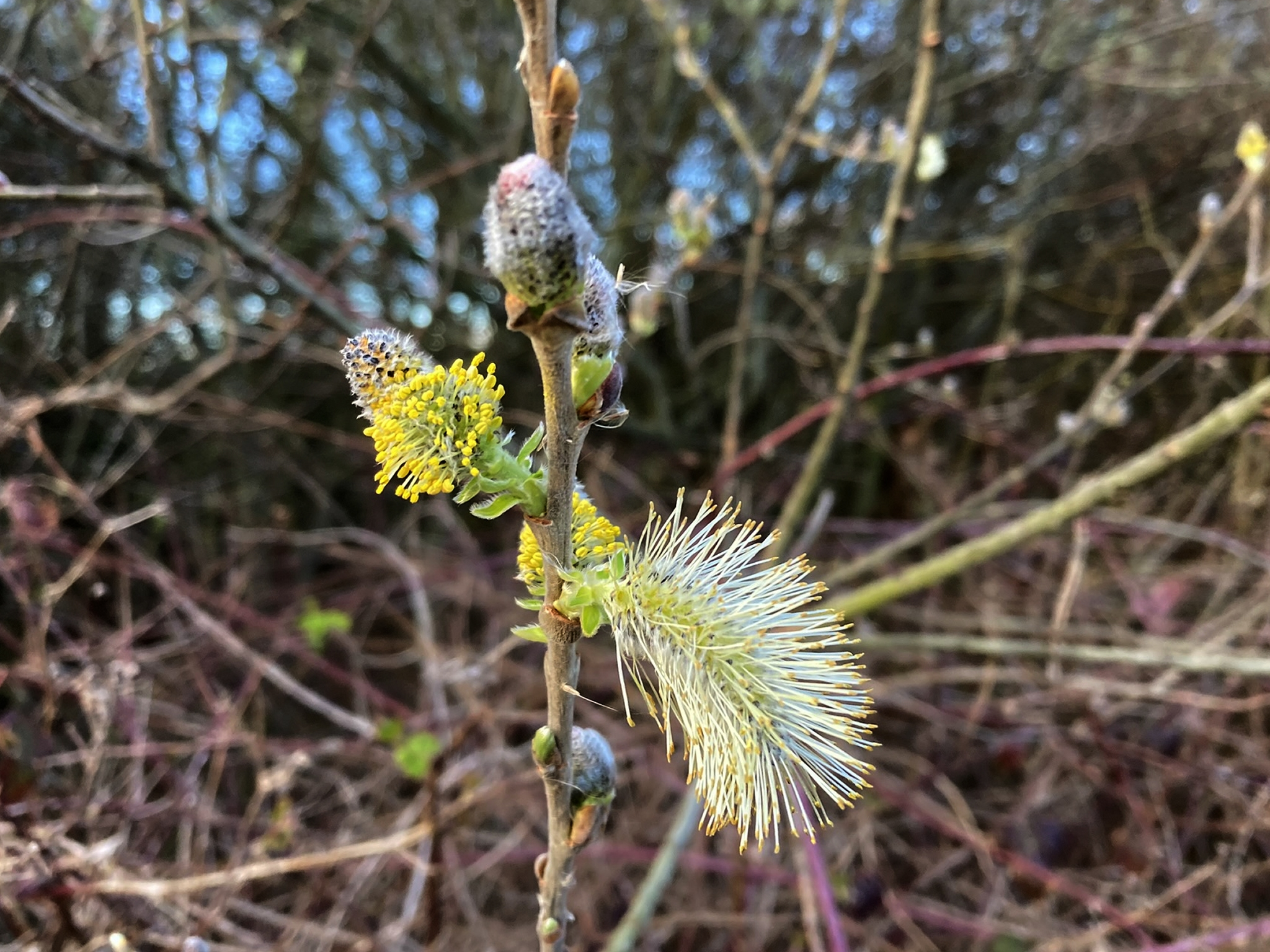
| Grey Willow (Salix cinerea),
a deciduous shrub or small tree native to Europe and
western Asia. Grey willow, also known as large gray willow
or common sallow, has narrow, greyish-green leaves and
catkins that appear in spring. Some practical uses for
this plant include: Biomass production: Grey willow is a fast-growing species, making it a suitable choice for biomass production. The plant's rapid growth allows for short rotation coppicing, providing a renewable source of fuel for heating or power generation. Erosion control and stabilization: Grey willow can be planted along riverbanks or on slopes to help prevent soil erosion and stabilize the area. Its extensive root system aids in holding the soil together, reducing the risk of landslides or erosion. Basket weaving and crafts: Grey willow branches are flexible and strong, making them ideal for weaving into baskets, hurdles, and other traditional crafts. The branches can be harvested through coppicing, promoting sustainable use and growth. Shelterbelts and hedges: Grey willow can be planted as part of shelterbelts or hedges, providing windbreaks and habitat for wildlife. The dense growth offers nesting and foraging opportunities for birds and other animals. Living structures: Living willow structures, such as tunnels, domes, and fences, can be created by weaving together live branches and allowing them to root and grow. These structures can be both functional and decorative, adding interest to gardens or public spaces. Medicinal uses: Willow bark, including that of the grey willow, contains salicin, a compound that is similar to aspirin. Traditionally, willow bark has been used for pain relief, fever reduction, and inflammation reduction. However, consult a qualified healthcare professional before using willow bark for medicinal purposes. |