
| Blackthorn | |
|
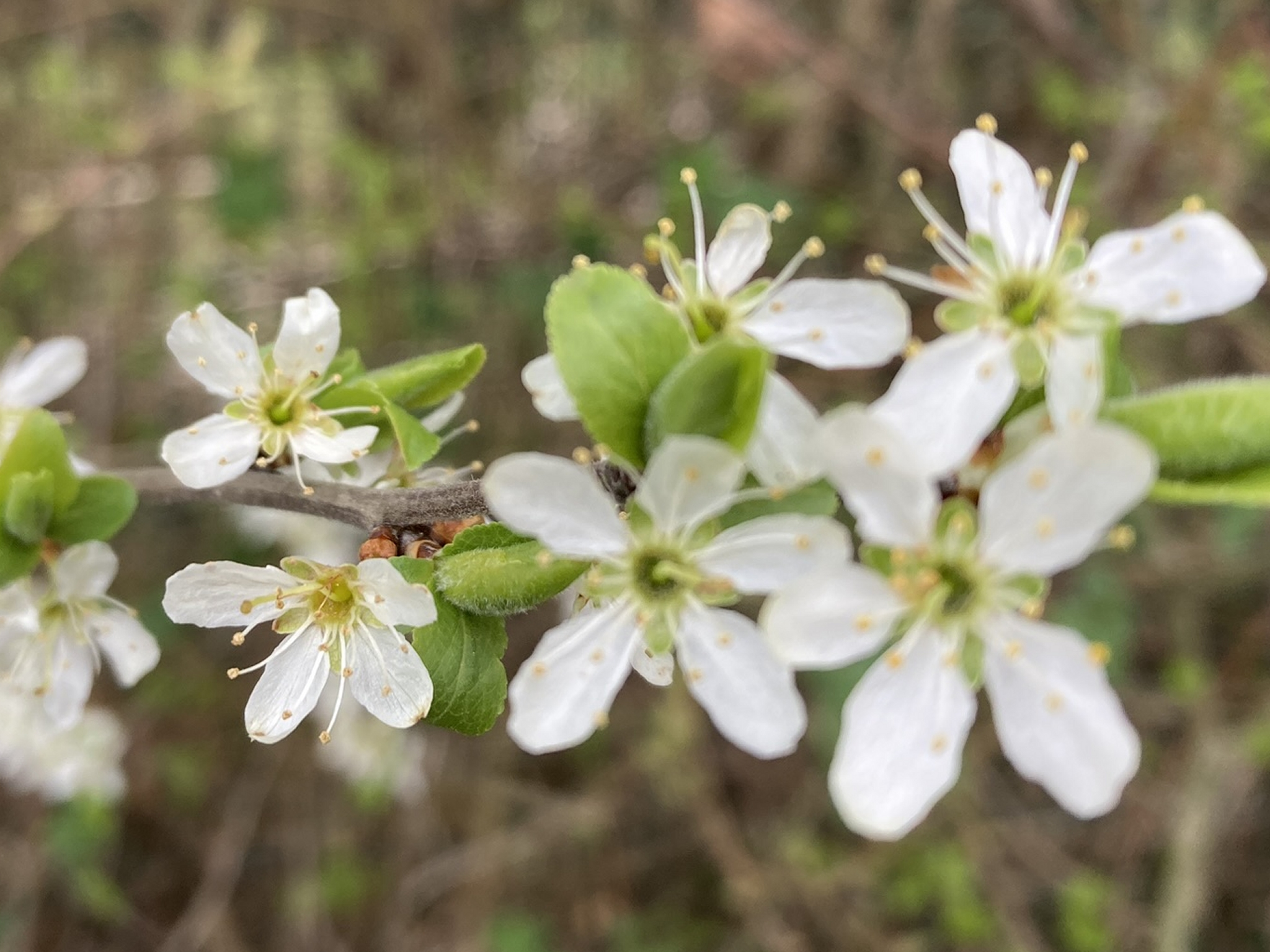 Location: Fen Drayton Nature Reserve, Cambridgeshire |
||
| Blackthorn (Prunus spinosa)
is a deciduous shrub native to Europe, western Asia, and
parts of North Africa. Blackthorn, also known as sloe, is
known for its thorny branches, small white flowers, and
bluish-black fruits. Some practical uses for this plant
include: Edible fruits: The fruits, called sloes, are small and have an astringent and sour taste when eaten raw. However, when they are cooked, the taste becomes more palatable. They can be used to make jams, jellies, and sauces. Sloe gin, a popular British liqueur, is made by infusing gin with sloes and sugar. Hedge planting: The dense, thorny branches of blackthorn make it a popular choice for planting hedgerows. These hedges provide excellent nesting and shelter for birds and other wildlife, and also serve as a natural barrier for livestock. Woodworking: Blackthorn wood is hard and dense, making it suitable for various woodworking purposes. It is commonly used for making walking sticks, tool handles, and Irish shillelaghs (traditional cudgels). The wood can also be used for small-scale carving projects. Medicinal uses: Blackthorn has been used in traditional medicine for various purposes, including as a treatment for fever, diarrhea, and sore throats. The astringent properties of the fruit can help alleviate digestive issues, while the flowers have been used as a mild laxative. However, it's essential to consult a qualified healthcare professional before using blackthorn for medicinal purposes. Dye: The fruits can be used to produce a natural blue or purple dye, which can be used for coloring textiles or other materials. |